
How Google Found Its AI Mojo: Lessons from Inside the Turnaround
Over the past two years, the tech world watched with confusion as Google — the company that literally wrote the Transformers paper — seemed to fumble the AI revolution. ChatGPT took the world by storm. Perplexity gained traction. Meanwhile, Google? Crickets.
Then something shifted.
Last week, Google’s Gemini app hit #1 in the App Store, dethroning ChatGPT. Nobody saw it coming. The company that everyone had written off in the AI race suddenly looked like it was winning.
I recently listened to Robby Stein, a product leader at Google working on AI Mode and search, on Lenny’s Podcast. What struck me most wasn’t just the tactical insights — though there were plenty — but how Google completely reframed what seemed like an existential threat into their biggest advantage. His perspective reveals not just what changed at Google, but timeless lessons about building breakthrough products that any builder can apply.
The Turnaround Nobody Expected: Flipping “Google is Dead”
“I feel like nobody saw this coming,” Lenny told Robby. “Everyone’s always like, Google, what have you guys been doing?”
It’s a fair question. When ChatGPT launched, the narrative was brutal: Google is dead. Nobody wants to sit through search results and click links. Why not just get your answer right there?
I remember reading those takes and half-believing them. The logic seemed sound. Who wants ten blue links when you can have a conversation?
But here’s what fascinated me about Robby’s explanation: Google didn’t try to fight this narrative. They embraced it — and twisted it completely.
“AI hasn’t really changed those foundational needs,” Robby explained. “People still come to search for a ridiculously wide set of things — phone numbers, prices, directions, tax payment pages. That core isn’t changing. What we’re finding is that AI is expansionary.”
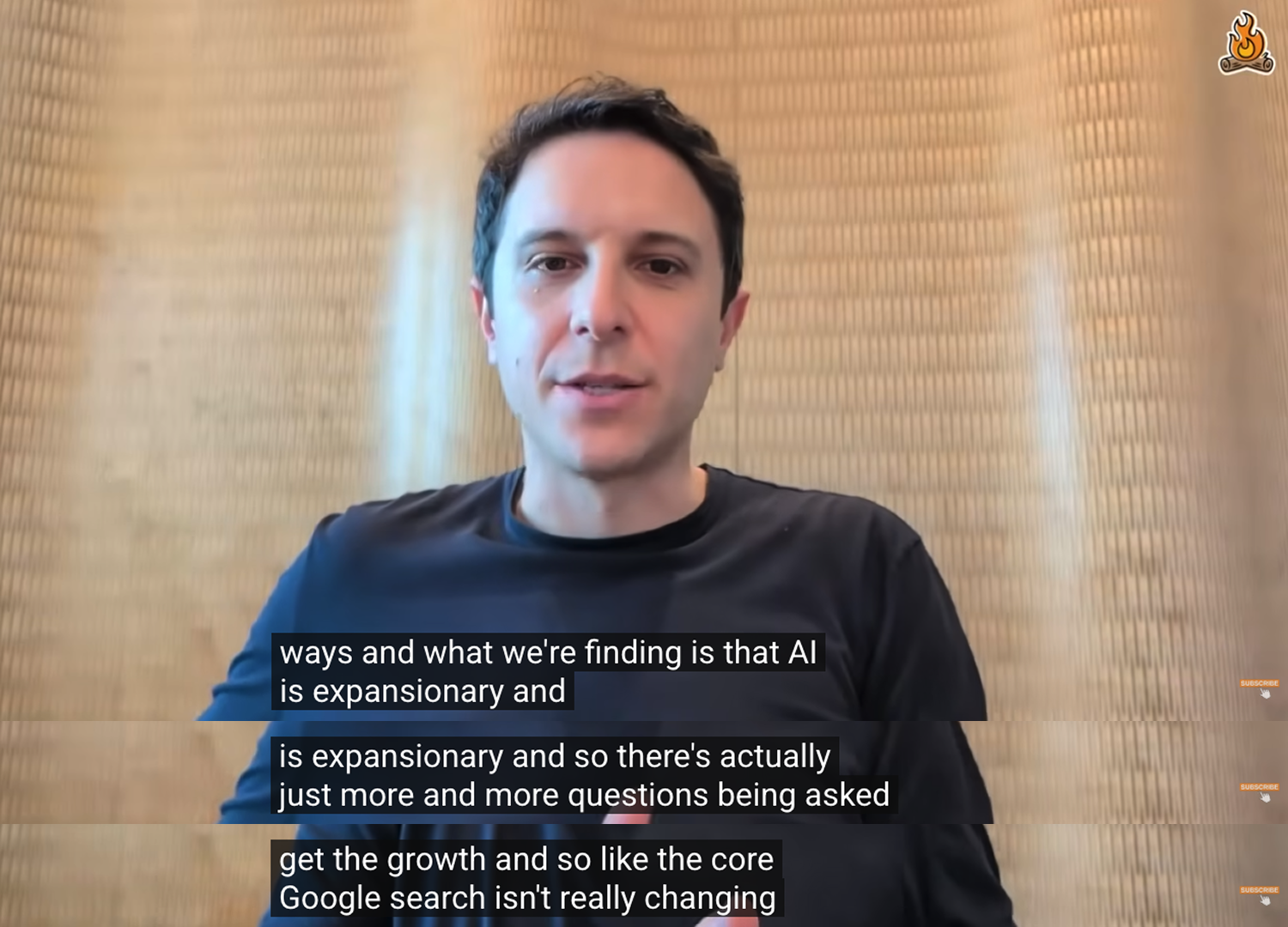
This reframe is brilliant. Instead of seeing AI chatbots as replacing search, Google recognized they were expanding what search could do. All those use cases ChatGPT enabled? They weren’t stealing Google’s lunch. They were creating new hunger Google could satisfy better than anyone.
Why? Because Google had something no startup could replicate: 50 billion products updated 2 billion times an hour. 250 million places in Maps. Decades of understanding web quality signals. The entire context of the internet, plus the infrastructure to make sense of it in real-time.
This understanding directly enabled Google to reverse its previous disadvantaged position and become the most experienced and resourceful competitor in the industry. The company that looked like it was losing suddenly had the strongest hand at the table. They just needed to play it right.
So what changed internally to make that happen?
Robby’s answer surprised me. There was no single pivot point, no dramatic reorganization, no magic hire. Instead, it was something more fundamental: an incredible sense of focus and urgency to deliver great products quickly.
“I think a lot of times people ascribe momentum to a one-time change or a single person,” Robby explained. “I find a lot of this is actually this compounding effect. Every month, ruthlessly improving the product or the models. Every day getting better. And then it kind of just hits this tipping point.”
It’s almost boring in its simplicity. But that’s exactly what makes it powerful.
The Architecture That Makes It Work
Once I understood Google’s strategic reframe, I wanted to know: how does it actually work? What’s different about their approach?
Robby broke down AI Mode into three components, and honestly, the architecture is quite convincing:
AI Overviews sit at the top of search results — quick, fast AI answers for natural questions. You’ve probably seen these already.
Multimodal capabilities through Google Lens let you point your camera at anything and ask questions. Growing 70% year-over-year with billions of searches.
AI Mode brings it all together into an end-to-end conversational experience. This is the piece that ties everything together — and it’s where Google’s unique assets really shine.
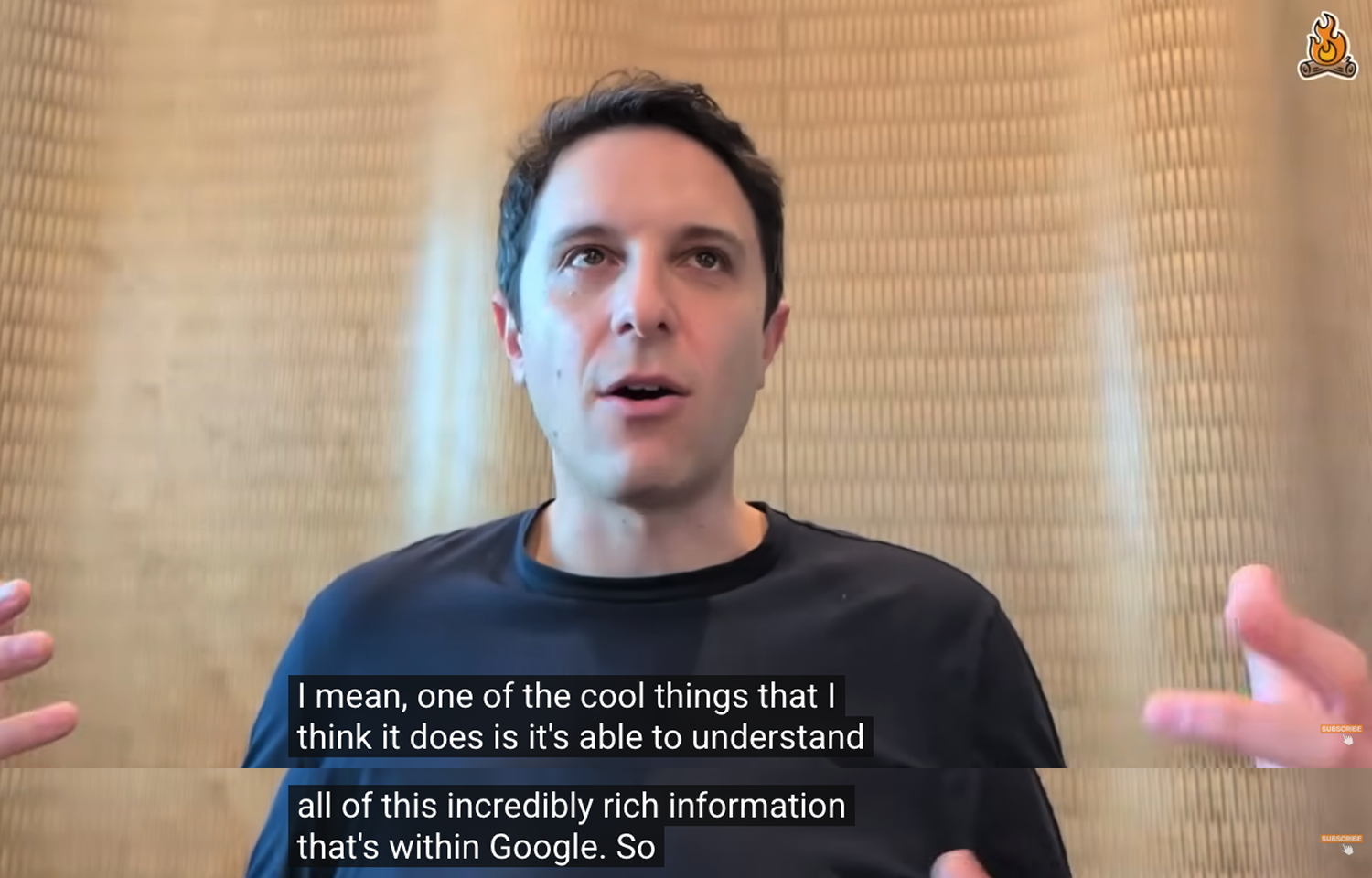
What clicked for me is that AI Mode isn’t trying to be ChatGPT. It’s specifically designed for information tasks, tapping into all that proprietary Google data I mentioned earlier. When you ask a question, it’s not just generating text from a model. It’s doing what Robby calls “query fan-out” — appending dozens of background queries, searching in real-time, pulling from shopping graphs and maps and finance data.
You’re not just chatting with an AI. You’re conversing with the accumulated knowledge of the internet, filtered through systems that have been learning quality signals for decades.
From Keywords to Conversation: The Vision
Here’s where something profound is happening, and I completely agree with Robby’s take on this: the evolution from keywords to natural language is fundamentally changing how we interact with information.
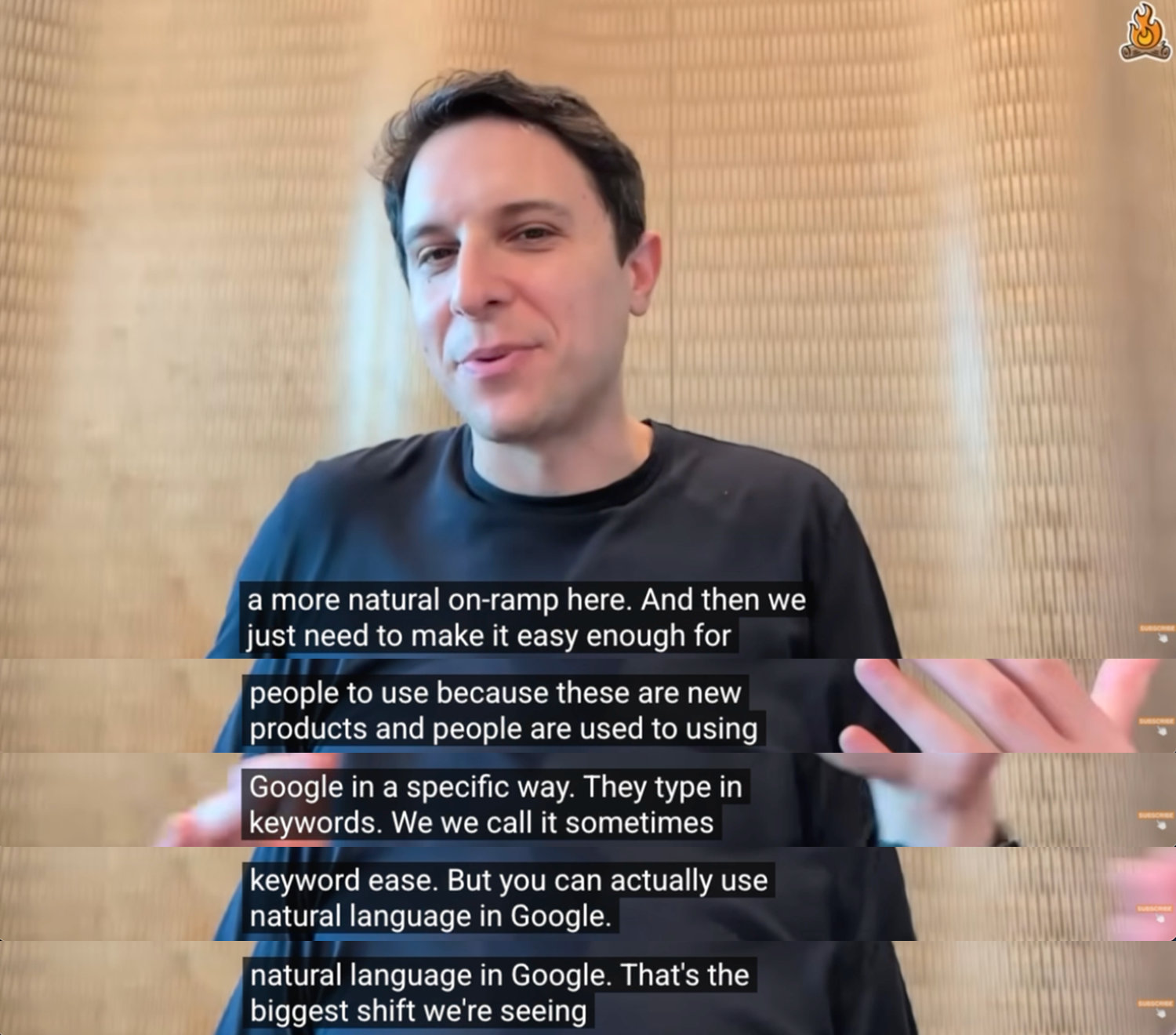
For years, we trained ourselves to “Google it” in a specific way. Short keywords. Guessing what the algorithm wants. It was almost a learned skill — knowing how to format your query so Google would understand.
Now? You can type: “What’s a great place for date night if I already went to these four restaurants, I’m looking for outdoor dining, and my friend has this allergy.”
The vision Robby articulated really resonated with me: you shouldn’t have to think about “how” to query — just ask, and Google routes you to the right AI-powered experience.
The Philosophy Behind It All: Embodying Relentless Improvement
Understanding the strategy and architecture is one thing. But what really drives successful product building?
Here’s where Robby’s story gets personal — and instructive.
When he was at Instagram, preparing for his first all-team meeting, he texted his wife asking for one word to describe him. Her response? “Dissatisfied.”
Not exactly the warm, fuzzy answer you’d want. But she followed up with something profound: “You want the world to be better. You feel this sense of dissatisfaction with what the world gives you, and you’re pushed and motivated to make it better.”
This became Robby’s north star: embodying relentless improvement. Not just building products, but physically manifesting this drive to make things better. Never being content. Always pushing.
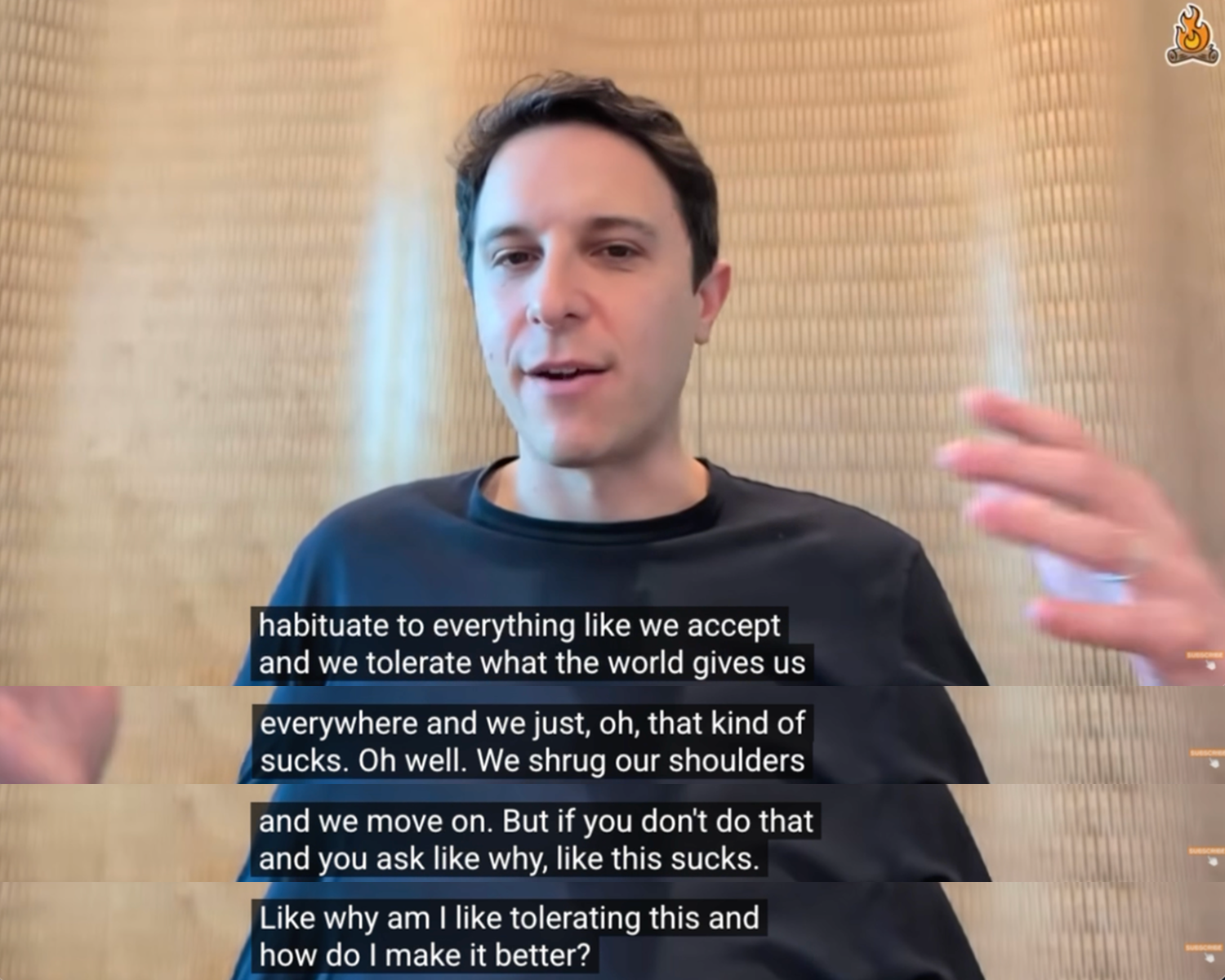
Then he shared the story that’s been stuck in my head ever since. Tony Fadell once did a TED talk about going grocery shopping and encountering that little sticker on a peach. You know the one. You stick your thumb under it to peel it off, and it punctures the fruit. The peach bleeds. You flick the sticker toward the garbage, miss, bend over to pick it up, put it in the trash.
The image is so vivid, so visceral. I can picture it perfectly because I’ve lived it dozens of times. But have you ever questioned it? Is that just how fruit stickers work?
This hit me hard. The best product people never habituate to the world’s frustrations. They stay curious. They stay dissatisfied. While the rest accept the peach sticker, they’re figuring out how to eliminate it entirely.
From Philosophy to Practice: Three Clear Principles
Robby distilled his approach to building great products into what he calls “three chapters.” What I appreciate about this framework is how clear and actionable it is — no fluff, just fundamental truths.
Chapter 1: Deeply Understand People
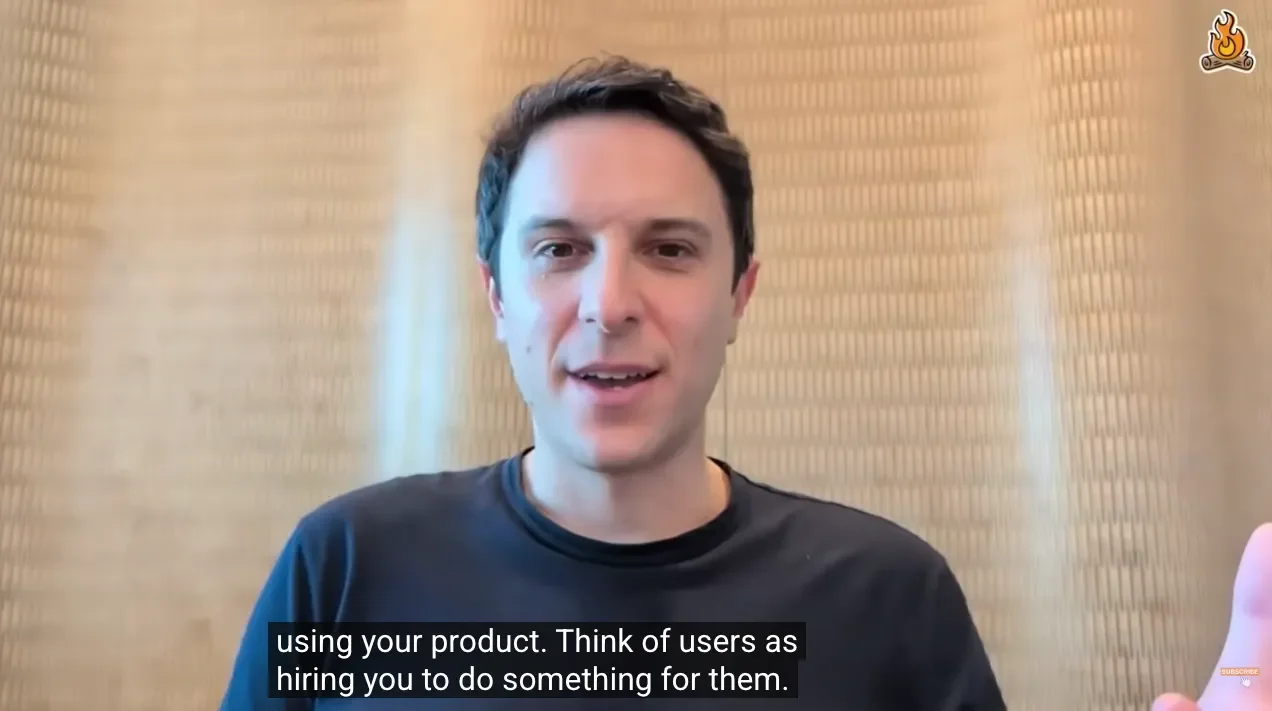
Don’t think about users using your product. Think about users hiring your product to do a job. As the old saying goes: “People don’t want a quarter-inch drill, they want a quarter-inch hole.”
Chapter 2: Analytical Rigor (Understand your problems)
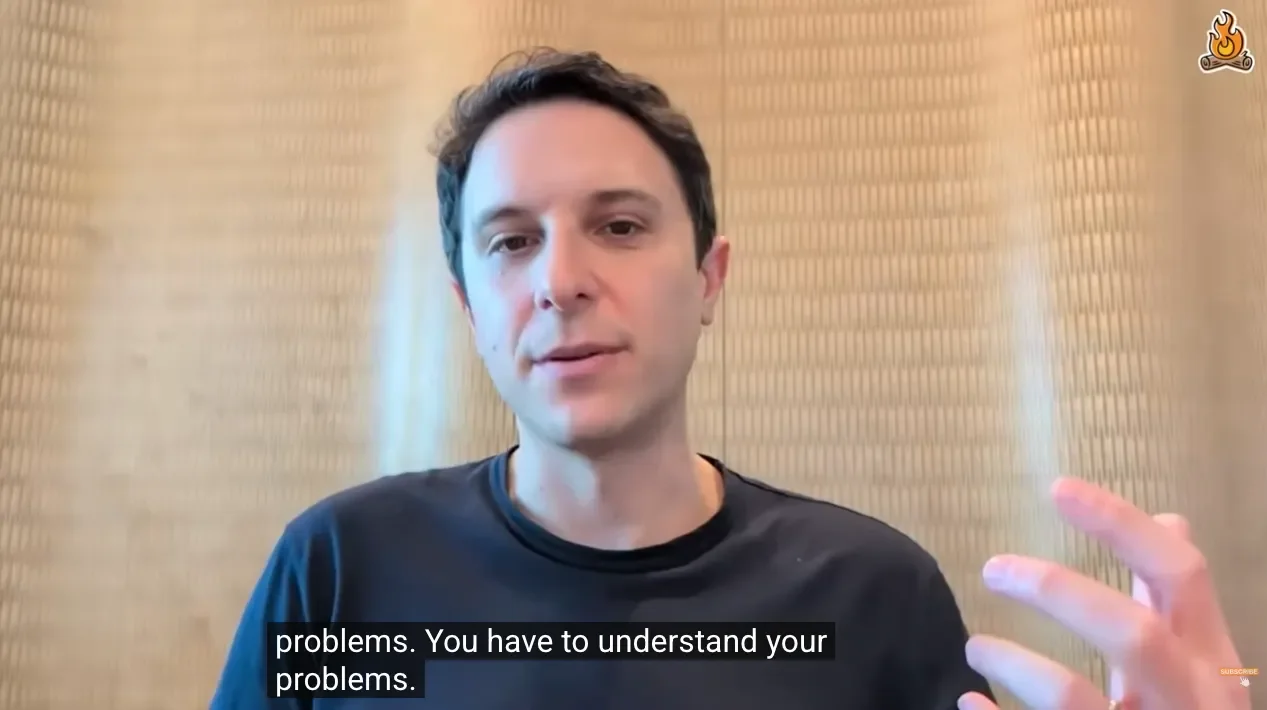
You need instrumentation to know if you’re on the right track. But here’s the key: metrics guide you, they don’t tell you exactly what to do.
“You’re a pilot,” Robby said. “Your instruments show you if the plane is flying correctly, but they don’t tell you exactly what to do. You have to think for yourself how to make it better.”
Chapter 3: Design for Clarity, Not Cleverness
Google could have called their new AI search experience something creative and unique. Instead? AI Mode.
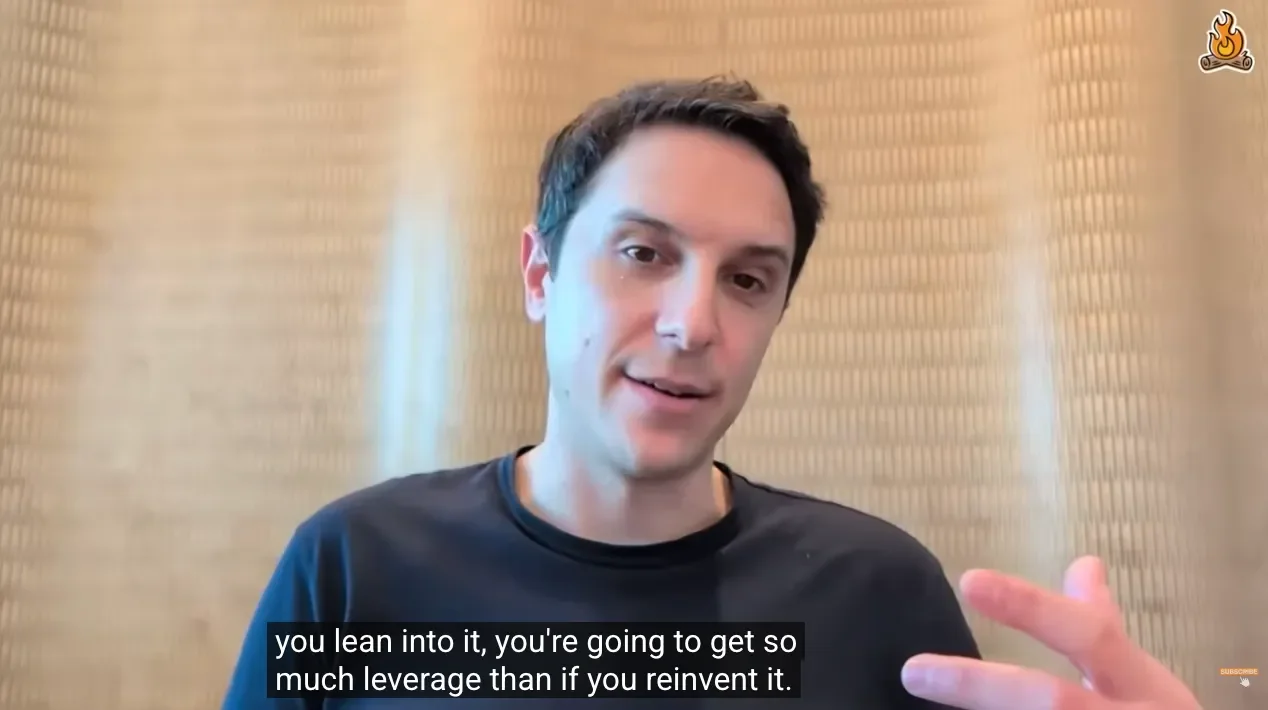
“Everyone knows what it is,” Robby explained. “Or we could call it something random. But then what is that? Now you’re working against yourself.”
This principle shows up everywhere in great products. Don Norman’s famous door example: after all these years, people still don’t know whether to push or pull certain doors because designers prioritized aesthetics over clarity. Don’t be that kind of designer.
These three principles feel so fundamental that they’re almost obvious — until you realize how many products violate them daily.
Industry Insights That Made Me Rethink Everything
Beyond the big strategic lessons, Robby dropped some insights that are incredibly thought-provoking and have real reference value for anyone building in the AI era.
On the evolution of SEO into “AEO” (AI Engine Optimization), he explained how AI Mode actually works under the hood. When you ask a question, the AI does “query fanout” — it appends dozens of background queries and searches in the background.
The key quality signal that determines what shows up? “Is this information relevant to this question?”
This is such a fundamental indicator of product quality, not just for search but for any AI product. It’s easy to generate lots of content. It’s much harder to generate the right content for the specific need someone has.
His advice for content creators really resonated with me because it returns to the root of users’ needs:
Think about what people use AI for (this is an expansionary moment for information needs)
Focus on advice/how-to content versus simple informational queries
Make content the best for that given set of needs
This isn’t about SEO tactics — it’s about understanding a fundamental shift in user behavior. When you align your content with what people are actually trying to accomplish, you’re building on a foundation that transcends any single platform’s algorithm.
Speed at Scale: How AI Mode Went from Idea to Launch
Perhaps the most striking revelation was how quickly Google built AI Mode — and honestly, this mirrors a project that I was participateing, so it really hit home.
About a year ago, a small team of 5–10 people started experimenting. Just a few technical leaders, a couple of designers. Very scrappy.
Then came what I’d call the “Aha moment.”
Robby was using an early version to plan an activity with his daughter. The AI found park information, Google Maps walkability data, links to verify everything. “Everything worked,” he recalled. “It was like hitting the perfect golf shot. I was blown away by what it could do.”
That conviction moment — that feeling of “holy shit, this actually works” — triggered the investment decision.
I completely agree with this working pattern. You start fast to prove the ability and validate the concept. Keep it small, keep it scrappy. But when you have that Aha moment, when you know it works and you’ve seen the magic, that’s when you trigger investment. That’s when you scale.
Proof of concept → Conviction moment → Investment → Scale
AI Mode wasn’t trying to replace Google Search. It was complementary. It used the same infrastructure — all that shopping data, all those maps, all that web context — but packaged differently for conversational search needs.
“AI is expansionary for Google,” Robby noted. “Core Google search isn’t changing. But you’re getting this expansion moment. People can now ask really hard questions they couldn’t before.”
The Contrarian Take: Sometimes You Need More Resources
Here’s where Robby’s advice diverges from Silicon Valley orthodoxy.
There’s a cult of lean, scrappy, fast. Ship fast, fail fast, tiny teams forever. But Robby sees teams give up too early or underinvest in products that need time to mature.
“To build a product that works for a lot of people based on a technological breakthrough, you need to actually think: what’s the group I need to build a great version from first principles?”
Close Friends at Instagram took 2–3 years because they kept the team too small. It was one of the longest projects they worked on. A startup might have died in that timeframe.
The heuristic? Start small to prove internal conviction. But once you hit that moment where friends are genuinely using your product after 30, 60, 90 days — not out of obligation, but because it’s useful — invest enough to build a shippable version. Don’t hold small teams too long.
What This Means for Builders
The Google AI story isn’t really about Google. It’s about what happens when you combine world-class technology with relentless product discipline — and how the right strategic framing can turn an apparent weakness into your greatest strength.
A few takeaways that have stuck with me:
Momentum compounds. There’s rarely one pivotal moment. It’s the daily, monthly, ruthless improvement that eventually tips. Google didn’t win through a dramatic pivot. They won through consistent execution. Stay in the game long enough to reach that tipping point.
Reframe threats into opportunities. When everyone said “Google is dead,” Google asked: “How is AI actually expanding what people need from us?” That shift in perspective changed everything. Don’t accept the dominant narrative if your unique assets suggest a different story.
Stay dissatisfied. Not unhappy — dissatisfied. The world is full of peach stickers that puncture fruit. Notice them. Question them. Fix them. That curiosity is what separates good product people from great ones.
Understand the job. Your users are hiring your product. What job are they really trying to get done? Not the surface-level answer. The real one. Close Friends wasn’t about privacy; it was about feeling connected to your friend group.
Quality means relevance. In an AI-powered world, the fundamental question remains: “Is this information relevant to this question?” Everything else is secondary.
Clarity beats clever. Every single time. Your job isn’t to impress designers or show off your creativity. It’s to make something people can actually use. AI Mode over something clever and confusing.
Know when to scale. Start small to prove the concept. But when you hit that Aha moment — when your friends are using it not out of obligation but because it genuinely works — that’s your signal. Invest properly. Build the version that can actually win. Don’t hold small teams too long just because “lean” is the mantra.
As AI continues to reshape how we build products, these principles feel more relevant than ever. The tools are changing rapidly, but the fundamentals of great product building remain constant.
Google didn’t win the AI race through a single breakthrough. They won by recognizing their unique advantages, investing with focus and urgency, and improving relentlessly every single day.
Boring? Maybe. Effective? Absolutely.
This article is based on insights from Robby Stein’s appearance on Lenny’s Podcast, where he discussed Google’s AI strategy, product philosophy, and lessons from building products at scale. Listen to the full episode for deeper dives into AI Mode’s technical architecture, the Close Friends development saga, and more stories from Instagram and Google.